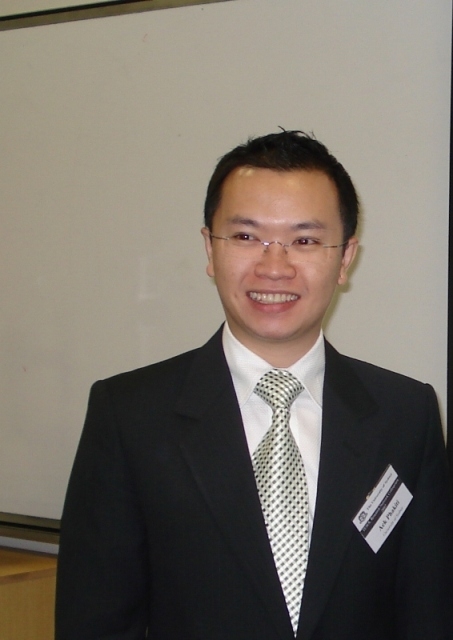
The University of Sydney TESOL Research Network aims to provide an opportunity for TESOL researchers, educators, students and practitioners to talk to each other about their research and to explore possible future research collaborations. This network hosts an annual colloquium, an academic journal (University of Sydney Papers in TESOL) and TESOL seminars.
Wednesday, 22 March 2017
12th University of Sydney TESOL Research Network Colloquium
12th University of Sydney
TESOL Research Network Colloquium
Keynote Speakers:
Proposals are invited for:
Instructions for submissions:
Free Pre-Colloquium Workshops on Friday 8 September, 2017:
Registration
for the Workshops (register by Friday 25 August, 2017):
Registration for the Colloquium (register by Friday 25 August, 2017):
Inquiries
TESOL Research Network Colloquium 2016 Events
11th University of Sydney TESOL Research
Network Colloquium
In conjunction with the
Centre for English Teaching (CET), University of Sydney
and the Department of
Linguistics, Macquarie University
A Free Colloquium
Saturday 10 September, 2016
Wednesday, 6 April 2016
Research Seminars in TESOL and Language Studies
Appraisal Calibration
and Strategic Competence in Second Language Learning or Use: A Fresh Look
Aek Phakiti
The University of Sydney
Date: Wednesday 20th
April 2016
Time: 17.00 – 18.00 pm
Venue: Education 458, The
University of Sydney
Strategic competence, which constitutes a set of
metacognitive strategies (e.g., planning, monitoring, and evaluating) for
regulating language use and other cognitive activities has been recognised as a
significant cognitive factor that distinguishes successful learners
from less successful ones (e.g., Bachman & Palmer 2010; Cohen 2011; Phakiti
2003, 2008; Purpura 1999). This presentation will introduce a cognitive
construct called ‘appraisal calibration’ as a significant facet of strategic
competence. Appraisal calibration
denotes a perfect relationship between appraisal confidence
in performance and actual performance outcome. A study of appraisal calibration
aims to examine and evaluate an alignment between individuals’ appraisal
confidence and their actual performance. Appraisal calibration
or miscalibration thus indicates the nature of monitoring and self-appraisal
accuracy. Research suggests that people have a tendency to be overconfident in
their performance. However, good
appraisal calibration is the metacognitive ability that
distinguishes successful students from unsuccessful ones. In this presentation,
theoretical frameworks underpinning calibration from cognitive and educational
psychology will be discussed, along with some key findings from recent studies
on second test takers’ calibration and strategic processing. Critical issues of
overconfidence and underconfidence on performance will also be addressed.
Implications for language teaching and learning, self-assessment practice and
future research directions will be articulated.Aek Phakiti is an Associate Professor in TESOL at The University of Sydney. His current research examines the nature of test takers’ calibration and strategy use in IELTS listening tasks. He is an author of Strategic Competence and EFL Reading Test Performance (Peter Lang, 2007), Experimental Research Methods in Language Learning (Bloomsbury, 2014), and with Carsten Roever, Quantitative Methods for Second Language Research: A problem-solving Approach (Routledge, forthcoming) and Language Testing and Assessment (Bloomsbury, forthcoming, 2018). With Brian Paltridge, he edited Continuum Companion to Research Methods in Applied Linguistics (2010, Continuum) and Research Methods in Applied Linguistics (2015, Bloomsbury) and and with Peter De Costa, Luke Plonsky and Sue Starfield, The Palgrave Handbook of Applied Linguistics Research Methodology (Palgrave, forthcoming). He has published in Language Learning, Language Testing and Language Assessment Quarterly. He is Associate Editor of Language Assessment Quarterly and University of Sydney Papers in TESOL. He is Vice President of ALTAANZ (Association for Language Testing and Assessment of Australia and New Zealand) (see further at http://sydney.edu.au/education_social_work/about/staff/profiles/aek.phakiti.php).
Enquiry: Aek Phakiti (aek.phakiti@sydney.edu.au). This is a free seminar.
The 11th University of Sydney TESOL Research Network Colloquium
In conjunction with the
Centre for English Teaching (CET), University of Sydney
and the Department of Linguistics, Macquarie
University
A Free Colloquium
Saturday 10 September,
2016
CALL FOR
PAPERS
The University of
Sydney TESOL Research Network Colloquium aims to provide a forum to discuss
and share research in the area of TESOL as well as explore possible future
research collaborations in the area. The Colloquium is a place for networking,
for both established and new TESOL researchers. The Colloquium includes
presentation sessions on a wide range of TESOL and TESOL-related research, both
in progress and completed. It also includes a networking session for people
working in the area of TESOL research. The aim of this is to provide the
opportunity for TESOL researchers to talk to each other about their research
and to explore possible future research collaborations.
Keynote Speakers:
·
Gary Barkhuizen, The University of Auckland
Using
narrative frames in language teaching and learning research
· Natsuko Shintani, The University of Auckland
Explicit grammar instruction for second language writing
Proposals are invited for:
·
25-minute
paper presentations (20 minutes for presentation followed by 5 minutes for questions/discussion)
·
90-minute
symposia (80 minutes for presentation followed by 10 minutes for questions/discussion)
Instructions for submissions:
·
Individual papers: A title, a 250-word abstract plus a
50-word summary of the abstract (plus your name, institution, email and
telephone).
·
Symposia: A title, a 500-word abstract plus a 200-word
summary of the abstract (plus your name, institution, email and telephone).
Proposal submission at: http://faculty.edfac.usyd.edu.au/limesurvey/index.php?sid=45361
· Submission deadline: Thursday 30 June, 2016
· Notifications on the acceptance of papers and
symposia: Monday 18 July, 2016
Free Pre-Colloquium
Workshops on Friday 9 September, 2016:
·
Workshop 1 (9.00am - 12.00noon): Gary Barkhuizen, The University of Auckland
An overview of narrative methods in language teaching and learning
research
· Workshop 2 (1.00pm - 4.00pm): Natsuko Shintani, The University of Auckland
Learning
grammar through writing
Registration
for the Workshops (register by Friday
26 August, 2016):
Registration
for the Colloquium (register
by Friday 26 August, 2016):
Contact
David Hirsh (david.hirsh@sydney.edu.au) for inquiries about the
Colloquium and Workshops.
Sunday, 20 March 2016
Cognitive Development Parts 1 and 2
The two parts of these videos provide a useful snapshot of theories in cognitive development.
Part 1: https://www.youtube.com/watch?v=brNQZjsrdi4
Part 2: https://www.youtube.com/watch?v=Bu5fy7GGCT4
Part 1: https://www.youtube.com/watch?v=brNQZjsrdi4
Part 2: https://www.youtube.com/watch?v=Bu5fy7GGCT4
Thursday, 11 February 2016
Research Seminars in TESOL and Language Studies
Is Mixed Methods
Research the Answer?
James
Dean Brown
University of Hawai‘i at Mānoa
Date: Thursday 24th
March 2016
Time: 16.00 – 17.00
pm
Venue: Education
325, The University of Sydney
This
paper begins by defining the notion of research
in TESOL, then moves on to discuss the various characteristics of qualitative
and quantitative research, especially within the framework of a qual/quant
continuum, wherein qualitative and quantitative research characteristics
interact. The paper continues with a definition of mixed methods research
(MMR), then explains the most salient features of MMR, while distinguishing
among three main varieties of MMR: qualitative mixed, pure mixed, and
quantitative mixed methods research. The paper then addresses:
1.
How mixed
methods research is different from multi-method
research.
2.
How MMR can and should combine the best
features of qualitative and quantitative research with the goal of overcoming
the weaknesses of each of these research paradigms.
3.
How researchers can combine qualitative and
quantitative research strategies so they cross-validate each other by
identifying connections between the two and searching for convergence,
divergence, and elaboration.
Examples
of these techniques are drawn from a large-scale MMR that the presenter
recently conducted in Japan. MMR did indeed provide interesting answers.
Enquiry: Aek
Phakiti (aek.phakiti@sydney.edu.au).
This is a free seminar.
Map, visit http://sydney.edu.au/facilities/maps/guide_01.shtml
Monday, 2 November 2015
University of Sydney Papers in TESOL: Call for papers for special issue Volume 11, 2016
Call
for papers for special issue Volume 11, 2016
Perspectives
from University English Language Centres in Australia
Guest
Editors: Patrick Pheasant and Lydia Dutcher
The
11th
volume of University
of Sydney Papers in TESOL
in
2016 is a special issue in collaboration with The University of Sydney Centre
for English Teaching. This exciting issue will cover a broad range of topics
within the research discipline of TESOL related to university English Language
Centres in Australia. Papers may include meta-analyses, action research, and
other empirical research, and cover topics relevant to students, teachers,
pedagogy, and practice within these centres.
The
University
of Sydney Papers in TESOL
is a peer-reviewed journal published by the TESOL Research Network in the
Faculty of Education and Social Work at The University of Sydney, Australia.
Submission
of papers
The
University of Sydney Papers in TESOL
invites submissions from academics, teaching staff and research students in
which an up-to-date research paper is provided on a specific TESOL topic of
current relevance that relates to university English Language Centres.
Postgraduate research students and teachers at university English Language
Centres in Australia are particularly encouraged to submit
a paper, either as a sole author or with their supervisor.
Word
length
Up
to 8,000 words, including references and tables etc.
Information
for contributors
Important
dates
•500-word
abstract submission: by November 30, 2015
•Full
paper submission for peer review: by February
28, 2016
•Anticipated
publication date: August 2016
Abstract
submission and full paper submission:
Subscribe to:
Posts (Atom)